
Acer palmatum dissectum ‘Tamukeyama’ (Tamukeyama Maple)
From £636.00 incl. VAT
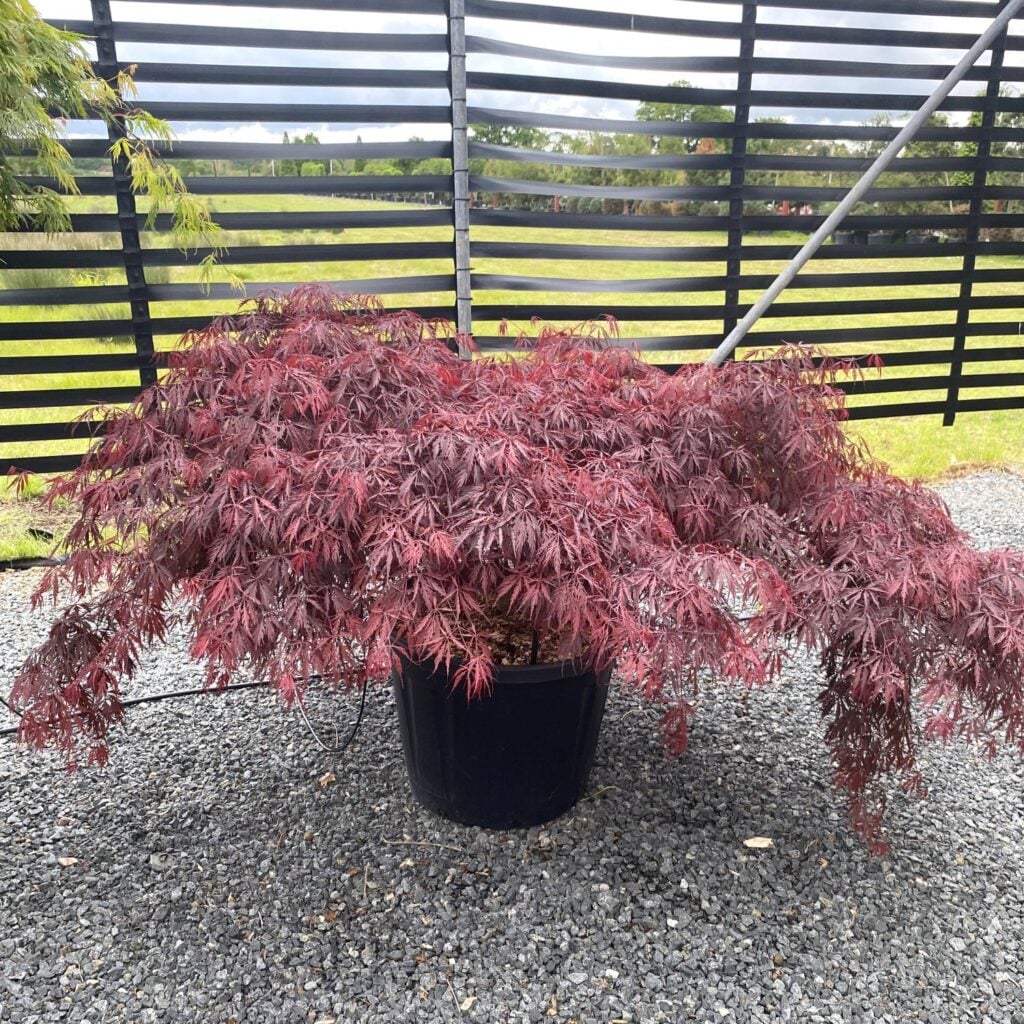
Acer palmatum dissectum ‘Tamukeyama’ at Architectural Plants is a deciduous mound forming small tree from Japan. Purple and deeply cut leaves turning bright red in autumn. 10ft x 10ft after 40 years.
Acer palmatum dissectum ‘Tamukeyama’ is an old variety that has been cherished since as far back as 1710. It is a beautiful tree where the branches weep and the whole form creates a low and wide-spreading mound. A young plant could reach 2.5m in height, and with a spread of 4m over some 20 years. Records in Japan report that there are specimens 4m in height but that it has taken a century and more to achieve this.
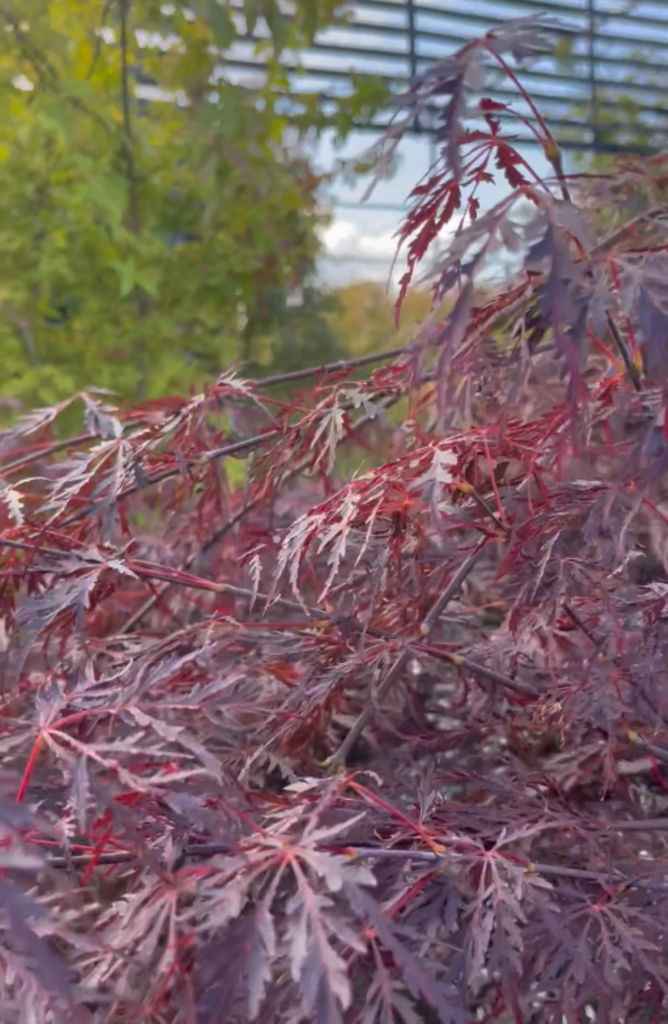
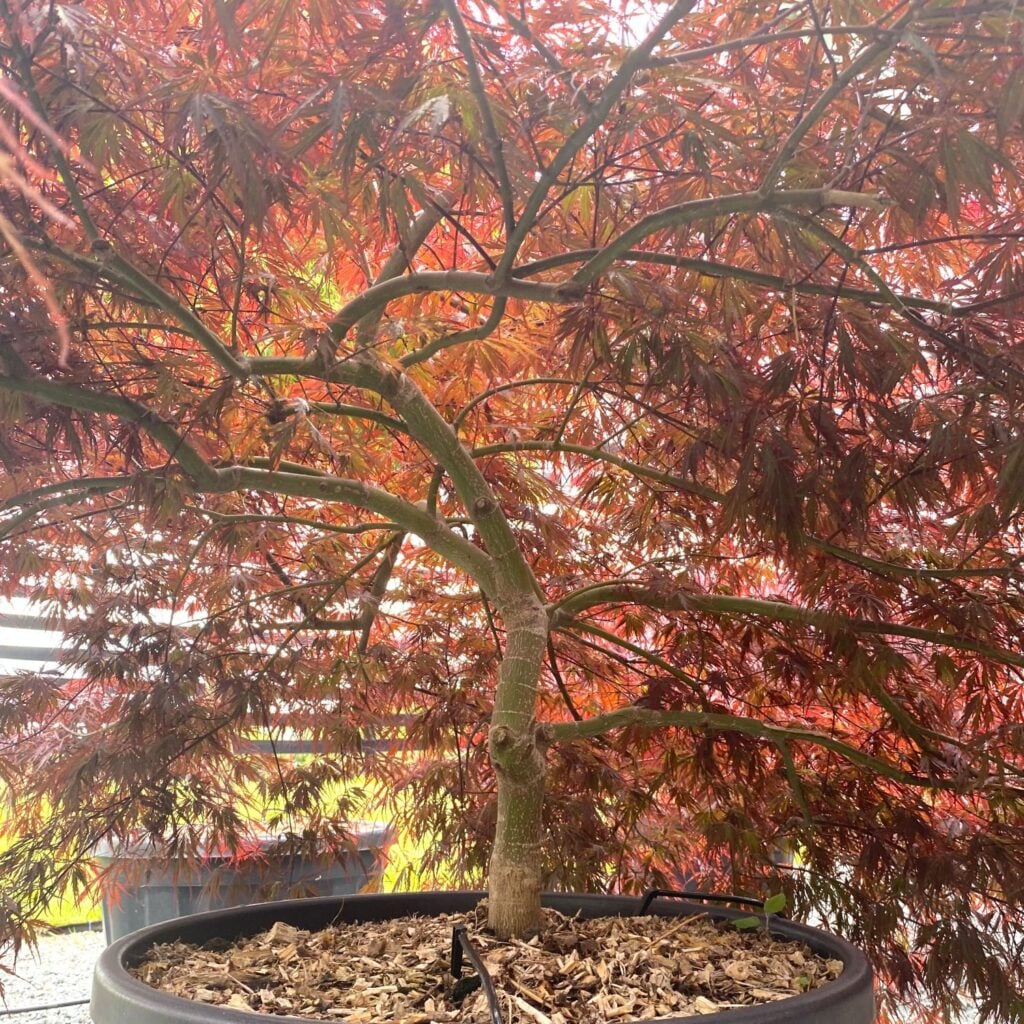
It is a laceleaf variety with very finely dissected leaves that emerge crimson and develop more of a purply red over the summer. They hold this colour well even in high temperatures though it will look at its best with a bit of shade. The new shoots and young branches are also a vivid red, maturing to a smooth grey. Then in the autumn, this beautiful plant turns a vivid, almost glowing red. Acers can be pruned and it is better to start shaping the plant while young as the smaller the pruning wound the sooner it heals. Larger stems should be pruned when the trees are dormant well before the sap rises in the spring. With the weeping dissectum varieties, sometimes judicious thinning of the inside growth can both allow better display of the branches and discourage insect and disease problems through congestion. Good hygiene of tools and equipment is always essential to avoid spread of disease.
Acer palmatum is almost wholly endemic to Japan and is the most variable of all the acer species with some named cultivars originating from the wild and others in cultivation. The accurate naming of the plants is an area of much confusion, Acer palmatum ‘Tamukeyama’ being a case in point with the plants having been known under half a dozen different names over the years.
Acers are widespread across the Japanese Islands and occur over a huge range of soils and conditions. They tend not to be gross feeders and the use of a balanced rose fertiliser or slow-release pellets applied lightly in spring seems to be sufficient. They have shallow and fibrous root balls so are pretty good in pots.
IMPORTANT NOTE:
Photos represent the plants at their different stages. Your plant may arrive with new/loose roots, having been recently pruned or cut to enhance it's growth.
Additional Information |
|
|---|---|
| Size | |
| Continent of Origin | |
| Features | Interesting leaf colour, Interesting Leaf Shape, Soft & Fluffy |
| Light | |
| Plant Type | |
| Soil Type | |
| Tree Size | |
| Situation | |