
Hedychium gardnerianum (Kahili Ginger)
£34.00 incl. VAT
Most exotic of the Ginger Lilies with broad leaves and deliciously fragrant cream coloured flowers. Hardy in mild gardens. If your garden’s cold, bung it in a pot and protect in winter.

Hardiness level Red
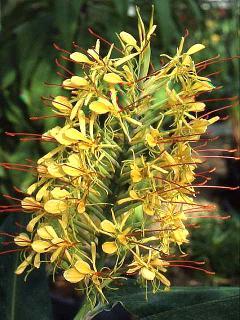
The family name derives from the Greek. 'Hedys' meaning sweet and 'chios' meaning snow. Originally from India, Nepal and Bhutan, Hedychium gardnerianum is one of the best Hedychiums with strong, upright growth, large stem-hugging leaves and spikes of powerfully scented creamy white flowers with prominent orange stamens. They die back in our winters but should be hardy in most places if heavily mulched and protected, growing from the ground to maybe 120cm tall over the summer before flowering in the late summer or early autumn.
Family Description
The Ginger Lilies are a family of plants from southern and eastern Asia where they grow on the margins of open woodland. A beautiful and dramatic plant with strong upright stems, large stem-clasping leaves and sweetly scented flowers. The flower spikes appear in late summer, often orange or white and with long and brightly coloured stamens. They are therefore happiest in a moist, (but not sodden,) rich soil and some light shade. They have fleshy rhizomes - think ginger roots - and while some are relatively hardy, others are more tender, so for many gardens, a heavy winter mulch seems to be sufficient protection but depending on conditions. The rhizomes may need to be lifted, stored over winter and started into growth indoors before planting out in the spring.
Growing in a pot works pretty well - especially in very cold gardens. Keep frost free in the winter and they'll remain evergreen. Wakehurst Place in Sussex is a great place to see them growing outside. Many of the species and forms they have growing there were introduced by Tony Schilling, Curator of the gardens in the 1980s and 90s from expeditions by him to Asia. The forms 'Steven' and 'Tara' are named after his son and his daughter.
IMPORTANT NOTE:
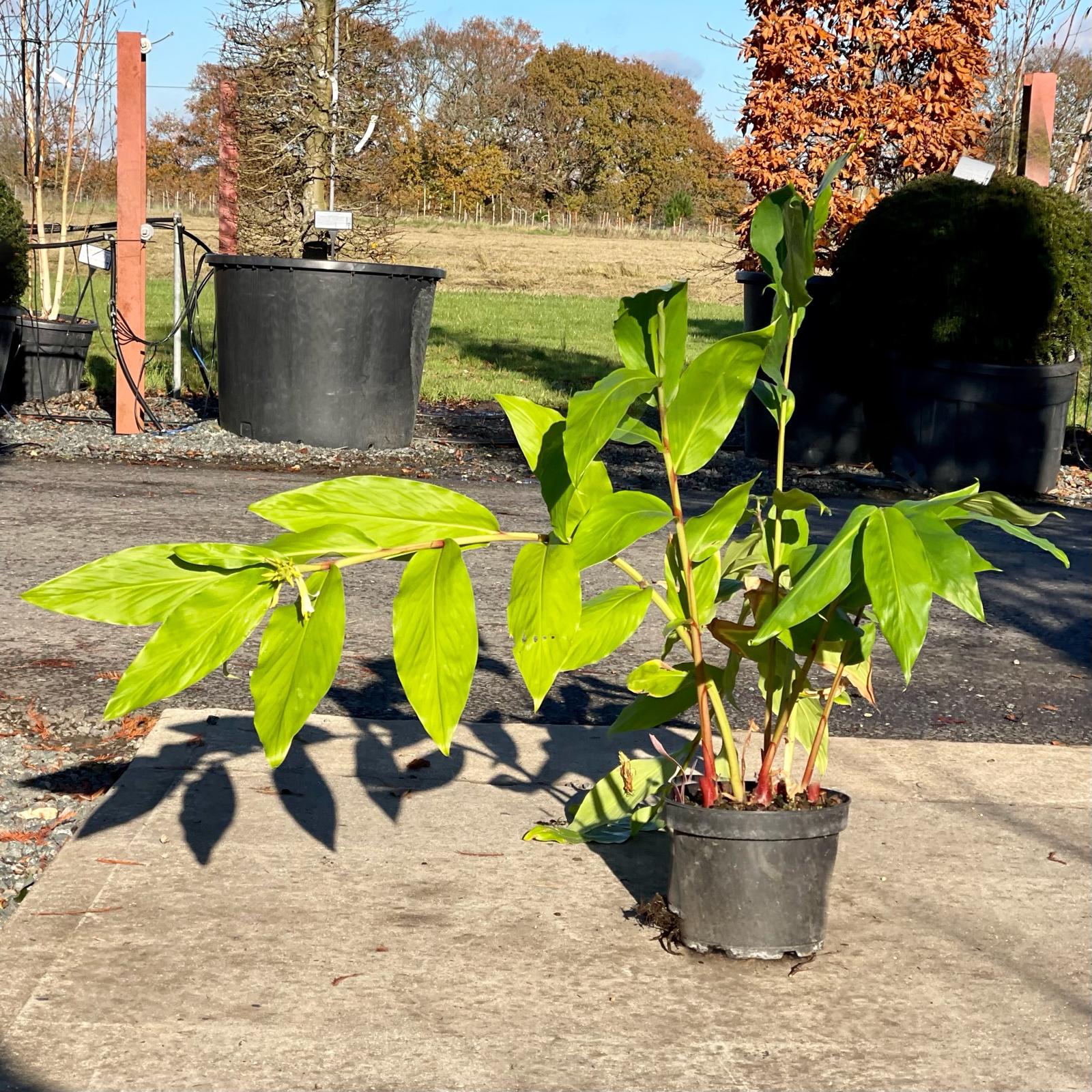
Photos represent the plants at their different stages. Your plant may arrive with new/loose roots, having been recently pruned or cut to enhance it's growth.
Additional Information |
|
|---|---|
| Size | |
| Plant Type | UK Grown, Big Leaves / Exotics, Flowers, Grown by Us, Herbaceous |
| Soil Type | |
| Light | |
| Continent of Origin | |
| Specialist Plants | Grown by Us, House Plants/ Indoor Plants, Mediterranean, Rare & Unusual (Collectables) |
| Situation | Coastal, Conservatories, Mild City Gardens, Plants for Pots, Sheltered Garden |
| Flower Colour | |
| Hardiness | |
FAQs
HOW FAST DOES PLANT GROW?
From soil level to full height over a season.
HOW DO YOU TAKE CARE OF PLANT'?
In cold areas, best to lift the rhizome and store so it can be stored frost-free over the winter. Alternatively, leave in the ground and mulch very, very heavily.
HOW TALL DOES PLANT GROW?
Up to 120cms.
DOES PLANT PREFER SUN OR SHADE?
Sun to dappled shade.
IS PLANT AN INDOOR OR OUTDOOR PLANT?
We grow it outside, but it could be grown in a cool conservatory.
IS PLANT SUITABLE FOR HEDGING?
Not appropriate.
CAN PLANT BE GROWN IN POTS OR CONTAINERS?
Yes, though it may benefit from some support as it can be so tall.
IS PLANT TOXIC TO PETS?
No.