
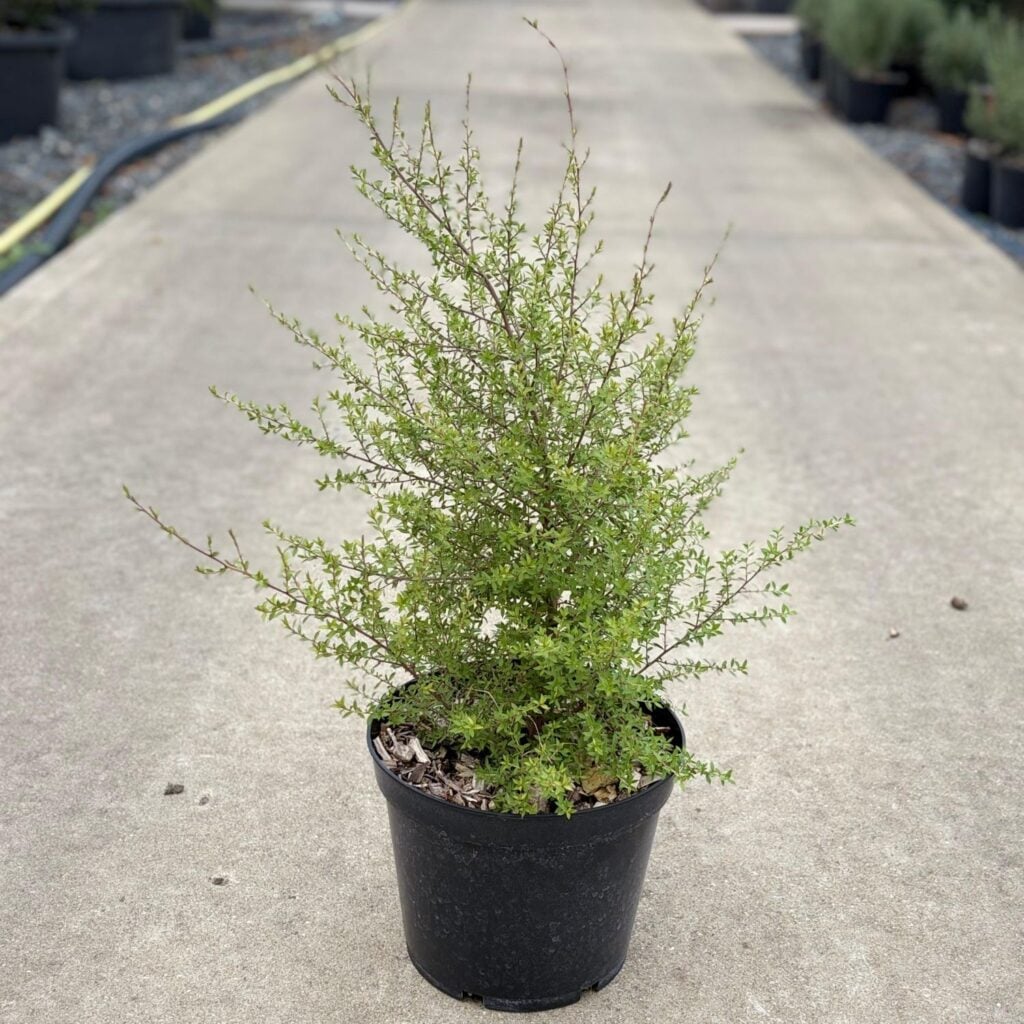
Leptospermum scoparium (Magic Honey Bush or Manuka)
From £25.50 incl. VAT
Leptospermum scoparium at Architectural Plants: grow this, keep bees, eat the honey, live forever, cure chilblains, reduce anxiety and overcome bowel disorders. A shapely evergreen shrub from New Zealand (5ft x 5ft after 6 years) covered in copious quantities of white flowers in spring.
Dense, low and shrubby in full sun; more tree like in the shade where it gets drawn up- sometimes to 20ft. Any reasonably well drained soil. ‘From seed collected at Lake Ohau, south island NZ’.
Leptospermums are shrubby members of the Myrtle family, growing to 3 or 4 metres in height. The dark evergreen foliage is fine and aromatic when crushed. In late spring or early summer, the plants are covered in masses of small single or double, red, pink or white flowers each with a dark eye.
‘Leptospermum’ is from the Greek meaning slender seed, and ‘scoparium’ means ‘like broom’ which it resembles in both structure and habitat. Grow this in poor, very free draining soil in a mild city or coastal garden. In colder areas, the base of a south facing wall may be a good choice for planting or alternatively grow it in a pot so it can be overwintered in a dry and protected position as the roots easily rot in cold wet soils.
Generally seen as a large shrub these pretty and floriferous plants can grow into small trees up to 15m in height in New Zealand and Southeastern Australia. Leptospermum scoparium has adaptations such as lignotubers, and seed pods that open in the presence of fire, so it is a pioneer tree that is often one of the first plants to recolonise the burnt and exposed ground left after wildfires. It is thought to have originated in Australia where the adaptations to wildfires were essential. Seeds were dispersed to the more temperate climate of NZ by hurricane force winds where it thrived in the areas cleared by the Polynesian people.
Widely regarded as representing the Māori natural heritage and cultural identity, Manuka honey is sometimes referred to as liquid gold because of its health and medicinal values. The antibacterial and antimicrobial properties of honey are enhanced by the presence of methylglyoxal, and it can sometimes be used topically to treat minor burns, sores and wounds. A poultice made from the bark was used to treat small injuries and it has long been valued by the indigenous population as a remedy for colds and fevers. The name ‘Tea Tree’ probably comes from Captain Cook’s crew who would brew tea from the leaves of the Manuka. Tea tree oil has a myriad of uses as widespread as the treatment of dandruff, lice, acne, razor burn and in aromatherapy.
IMPORTANT NOTE:
Photos represent the plants at their different stages. Your plant may arrive with new/loose roots, having been recently pruned or cut to enhance it's growth.
Additional Information |
|
|---|---|
| Size | 3L (H60-70cm, W30-40cm), 5L (H20cm, W10cm), 7.5L (H60-70cm, W30-40cm) |
| Plant Type | |