

Liquidambar styraciflua – Standards (American Sweetgum)
£895.00 incl. VAT
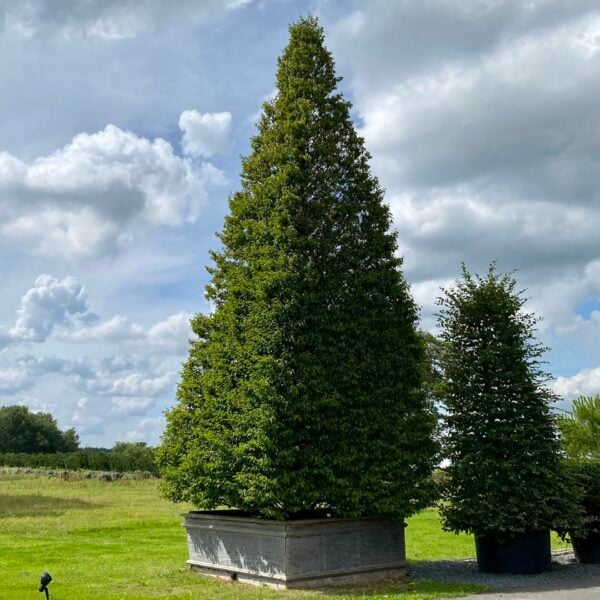
Liquidambar styraciflua at Architectural Plants is quite exceptional, a pleached tree that offers flaming autumn colours, sweetly fragrant resin and ‘satin walnut’ timber. Native to eastern United States and Mexico, the gum used to be chewed to relieve sciatica and weak nerves.
Position in full sun to partial shade, any aspect, any soil that is moist but well drained, (except shallow soil over chalk).
There is no doubt that this beautiful tree is famed for its autumn colour, but it has many other equally lovely attributes. Straight trunked and symmetrical, this tree can reach 20m over a 50-year span in cultivation, (though twice that in its native lands,) with a pyramidal juvenile silhouette that spreads and broadens in later years. Liquidambar styraciflua is a deciduous tree, so that it is in the winter that the red and grey streaked and deeply fissured, light-brown bark becomes most obvious, as are the strange corky ‘wings’ on the branches. In the spring, new leaves emerge of a mid-green colouration, with five or seven deep lobes and finely serrated edges. These are followed by flowers and woody burr-like ball shaped fruits that can last long into the winter though the tree is often shy of fruiting in the UK – which is actually a good thing as the ball-burrs from a heavily fruiting tree are known to be a bit of a nuisance in the USA.
The sunniest spots give the best red and orange autumnal colours, while trees in more moist light shade may tend towards the purples and crimsons. The soil can be clay, loam or sand and the shallow spreading roots mean that the tree does not enjoy prolonged periods of dry weather. In its native regions in the warm and temperate eastern USA or the tropical mountainous regions of Mexico, it grows in swampy land, on flood plains and along riverbanks.
Liquidambars are hardy in the UK; indeed, the first tree was planted in 1681 in Bishop Henry Compton’s palace gardens at Fulham and though that specimen is long gone, they can have a life span of hundreds of years.
As timber, the wood is heavy and hard, with a colour palette ranging from bright reddish brown to almost white, so it is sometimes used for veneers.
Damage or cuts to the trunk cause a sweet golden resin to ooze from the wound and it is from this that both parts of the name derive. Native American tribes would combine this ‘liquid storax’ with sweet herbs and burn it as a pleasant-smelling incense. The gum can be used in perfume and adhesives and as a treatment for skin and respiratory difficulties. In Mexico, it used to be mixed with tobacco and chewed as a gum.
IMPORTANT NOTE:
Photos represent the plants at their different stages. Your plant may arrive with new/loose roots, having been recently pruned or cut to enhance it's growth.
Additional Information |
|
|---|---|
| Size | |