
Ginkgo ‘Saratoga’
£97.50 incl. VAT
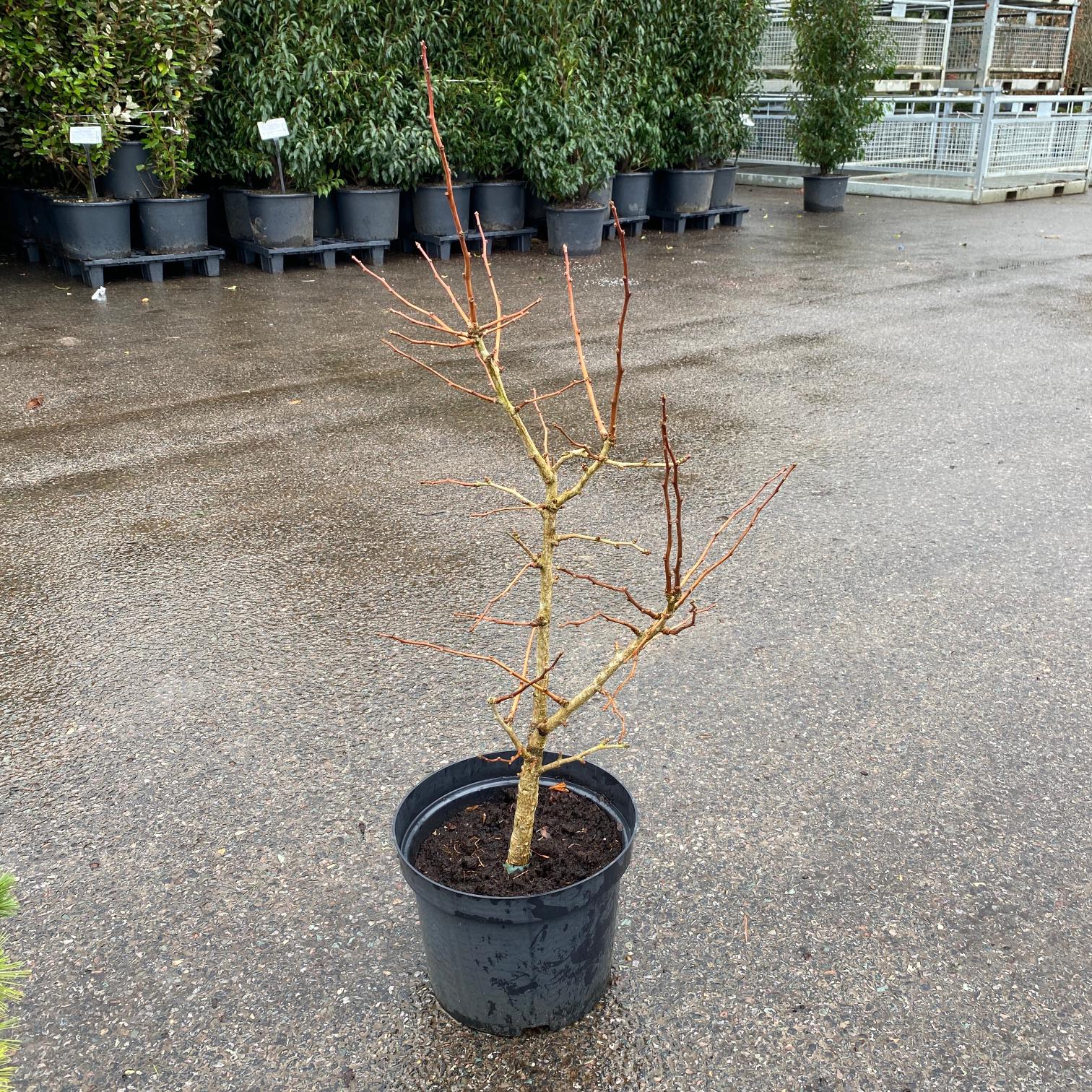
‘Fishtail’ is a perfect description of the long-stalked and pendulous, deeply bilobed, frilly-ended leaves. As a young tree Ginkgo biloba ‘Saratoga’ is a beautifully symmetrical, slender, columnar shape but this develops into more of a pyramidal silhouette as it matures. As with the species, the leaves are a matt green for the summer, but become a vibrant yellow in the autumn. The first decent frost can cause all the leaves to fall at once leaving the tree standing on a golden carpet.
This form of the Maidenhair Tree was bred at the Saratoga Horticultural Foundation in California and has been in cultivation since 1975. It varies from the species in both form and foliage.
Hardy and deciduous, this is known to be a male cultivar and while our maritime climate is not particularly conducive to fruiting in any case, it does mean that this tree is an even more useful specimen for planting in streets and parks. Ginkgoes as a group are both drought and pollution resistant, as long as they receive good, deep watering for the first year or two until established. They can reach 8m over a decade, and little or no pruning is required.
I have a long, (and constantly changing), list of favourite trees, but Ginkgo has to be near the top. Beautiful, heavily veined fan shaped leaves, a matt olive in the summer and the most glorious yellow before they fall in the autumn. There is a stillness and a serenity around this tree.
The name is thought to have been derived from the Japanese gin kyo, meaning silver apricot, and it is an ancient tree, with fossil records dating from the Jurassic era some 170 million years ago. They were introduced to Korea and Japan, and they were often seen planted around temples. Incredibly, on the eastern seaboard of China there are living trees known to be 3500 years old but having flourished over much of the globe in prehistoric sites, their semi-wild distribution has shrunk to a few tiny areas. There are specimens of this extraordinary tree that have survived the atomic blast at Hiroshima.
They are known to grow along stream-sides where there is disturbed, fine, silty, acid soil. They can sucker from the base when the soil is disturbed, and following crown damage, develop aerial roots from the underside of branches that then root out to create thickets making them excellent candidates for prevention of riverbank erosion. They are best in full sun in well-watered but well drained soil preferring summers hotter than our maritime climate. The ginkgo is diecious with male and female trees and the reproductive process is both complex and fascinating should you care to investigate.
Tall and slender in shape, the crown spreads with age. It is a mere three hundred years ago that these slow growing survivors were brought to Europe and we now have specimens of 15 or 20m in the UK, while in Italy and Portugal there are trees that have reached 35m.
Ginkgo has both medicinal and culinary uses but as with all powerful drugs must be used correctly and with respect. One last fact to make you smile… Ginkgoes do not suffer from pests since all their natural pests as well as predators have long since become extinct.
Additional Information |
|
|---|---|
| Size | |
| Plant Type | |
FAQs
HOW FAST DOES GINKGO BILOBA ‘Saratoga’ GROW?
30cm annually, depending on conditions.
HOW DO YOU TAKE CARE OF GINKGO BILOBA ‘Saratoga’?
Plant in a sheltered position in the sun in well drained soil. Water as needed until established.
HOW TALL DOES GINKGO BILOBA ‘Saratoga’ GROW?
12m over 50 years.
DOES GINKGO BILOBA ‘Saratoga’ PREFER SUN OR SHADE?
Sun.
IS GINKGO BILOBA ‘Saratoga’ AN INDOOR OR OUTDOOR PLANT?
Outdoor.
IS GINKGO BILOBA ‘Saratoga’ SUITABLE FOR HEDGING?
No.
CAN GINKGO BILOBA ‘Saratoga’ BE GROWN IN POTS OR CONTAINERS?
No.