
Carpinus betulus – Topiary
From 1995.00 incl. VAT
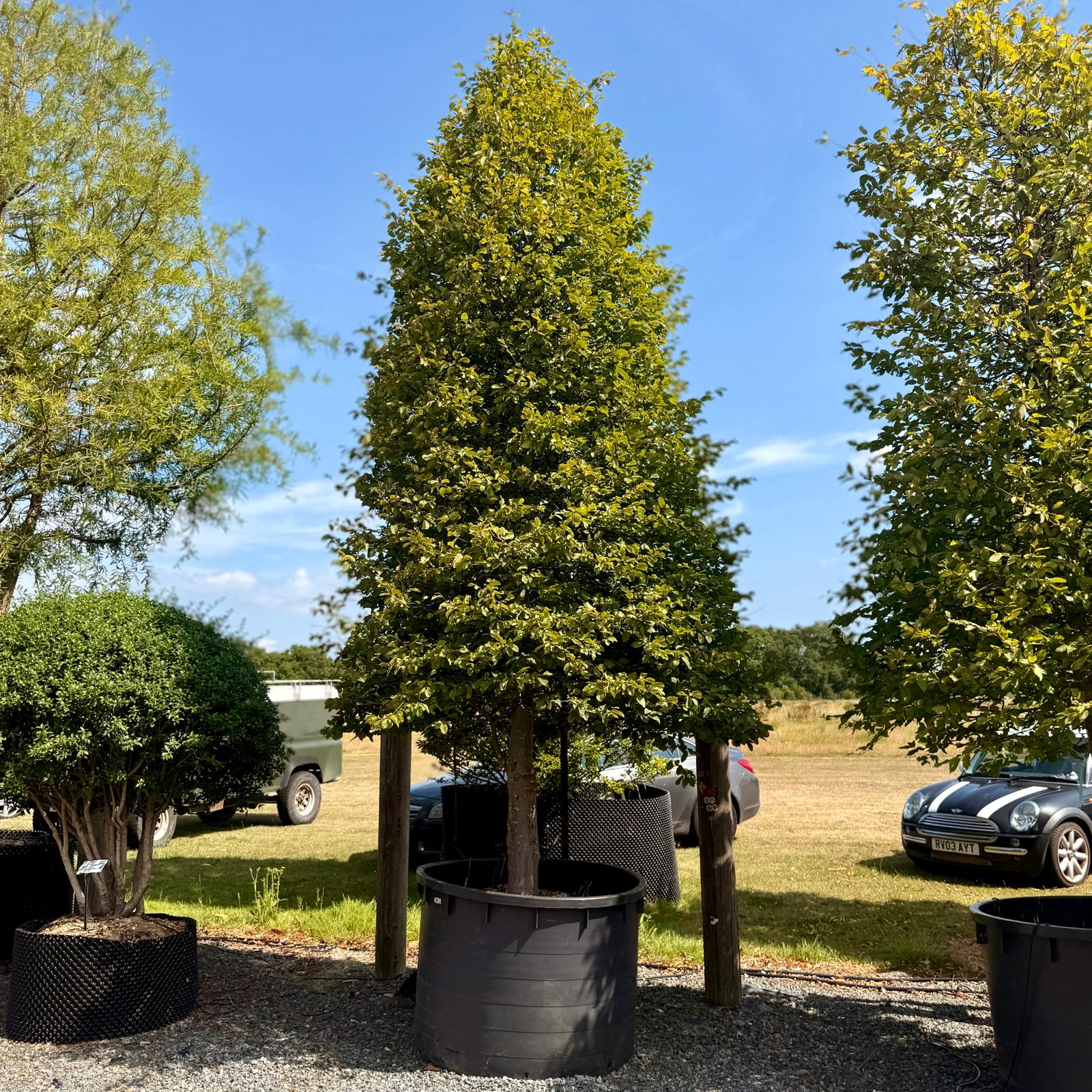
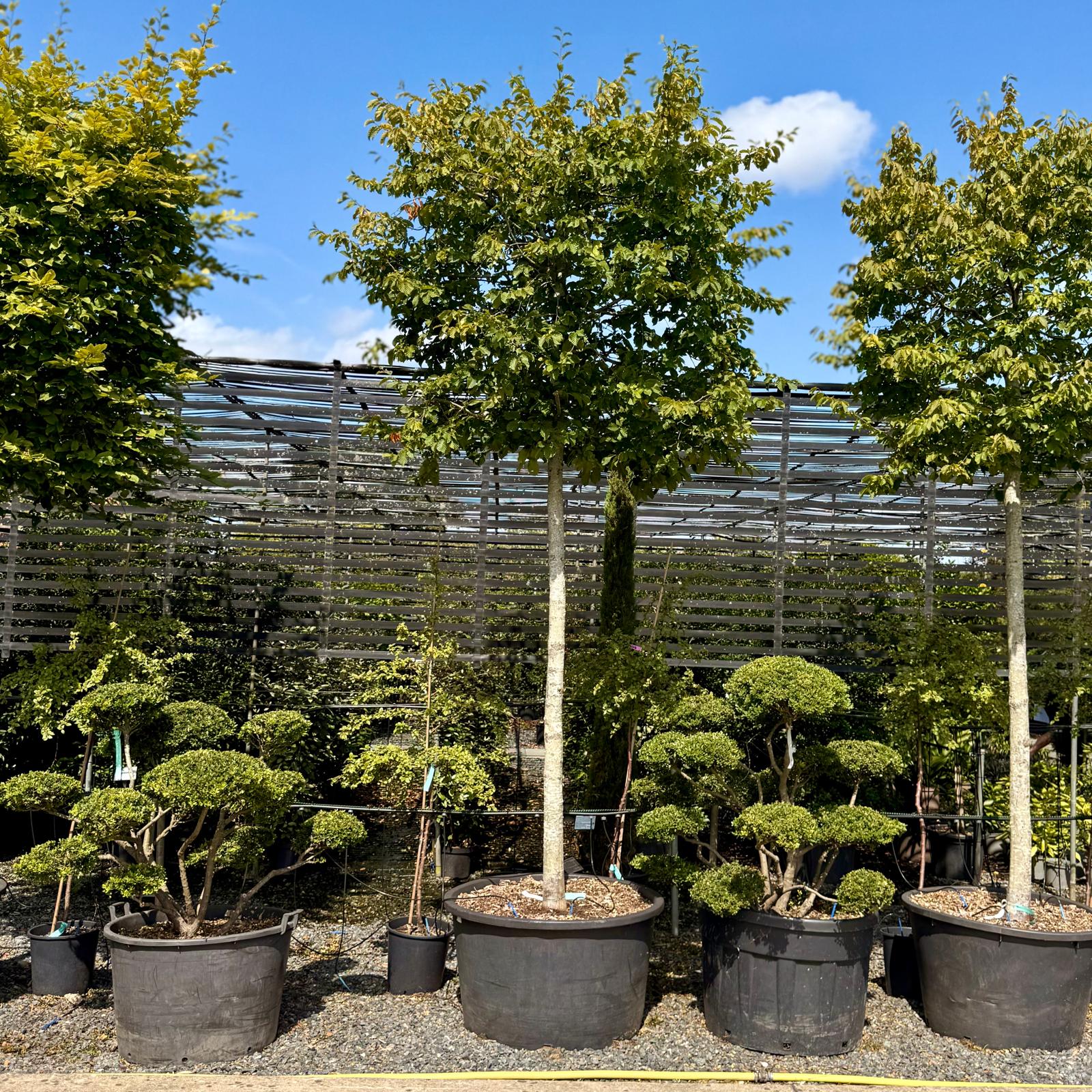
A well known deciduous British tree that’s long been used in gardens for topiary and hedges. This is our topiary.

Hardiness level Green
The Hornbeam: Carpinus betulus, is a real aristocrat of a tree. It grows wild in this country, so is absolutely hardy and adaptable, and yet for centuries has been used both in its natural form, and as topiary in the most formal of gardens. It is deciduous, but has a habit, called marcescence, of retaining the brown, dead leaves over winter until they are finally shed in spring as the new growth emerges. This means it will bring year round interest to your garden with drama and structure whatever form you choose. Left to grow unmaintained by creative shaping or cutting back it has the capacity to grow to 30m, but over a long time!
The name Hornbeam is derived from the fact the timber is exceptionally hard and hard wearing. Traditionally, it was used for the replaceable teeth on timber cog wheels used in wind and water mills. Many years ago, our Founder, originally a cabinet maker, used to buy timber from Agates in Horsham. He once asked Wally (the mill foreman) what this little known timber called Hornbeam was like. He gave the immortal but accurate reply : "It's like f***in' 'ard beech mate".
Carpinus betulus topiary, is just the ticket for shaping the landscape. Our larger pieces have a powerful and commanding presence ideal for sophisticated definition and drama. We have arches to frame entrances, view points and wider vistas. We’re also very fond of gatekeepers: elegant bold topiarised pieces that resemble the poshest of traditional looking salt and pepper mills. Ideal for keeping watch on either side of your driveway gates. You might prefer our pillars for a less manicured but still deft sculptural emphasis.
N.B. When clipping several plants with the same tool, have a bucket containing a 5% bleach solution and swish your blades around for 30 seconds between plants to sterilise them. This will help avoid the chance of cross contamination of disease.
As with all woody plants, plant high, exposing as much of the taper at the base of the trunk as possible. Allowing soil to accumulate around the base of a tree can be fatal. Keep very well watered when first planted.
Additional Information |
|
|---|---|
| Size | Cube Head: F Std 235L (H4m, W2.1m) S2.2m, G24-26cm, Globe Head F Std (H3.6m, W1.6-1.7m) S2-2.1m, G38-40cm, Raised Cone 750L (H4.5-5.1m, W2.2-3m), Spiral 750L (H4.5-5.1m, W2.2-3m) |
| Plant Type | |
| Soil Type | |
| Light | |
| Continent of Origin | |
| Specialist Plants | |
| Tree Size | |
| Situation | Coastal, Exposed (To wind and sun), Mild City Gardens, Sheltered Garden |
| Hardiness | |
FAQs
How fast does Carpinus betulus grow?
The foliage is taller than the trunk so the overall height of these is some 15ft overall but less than 2ft thick. It rather depends on the size of your stepladder and your head for heights.
How do you take care of Carpinus betulus?
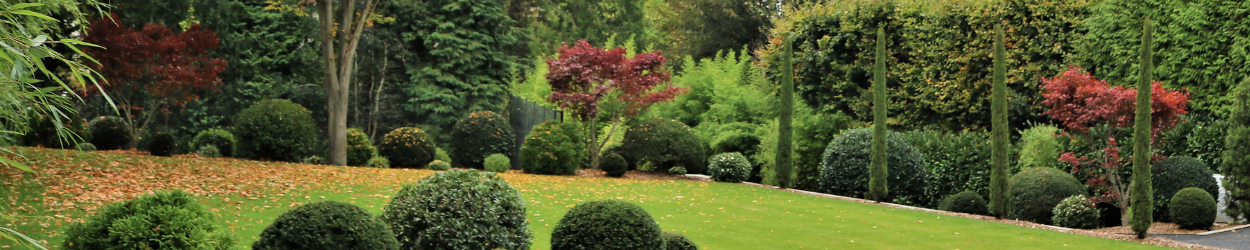
For maximum impressiveness, the ideal is to clip them to the proportion of the ones in the picture attached of a garden in Wiltshire. When clipping several plants with the same tool, have a bucket containing a 5% bleach solution and swish your blades around for 30 seconds between plants to sterilise them. This will help avoid the chance of cross contamination of disease. As with all woody plants, plant high, exposing as much of the taper at the base of the trunk as possible. Allowing soil to accumulate round the base of a tree can be fatal. Keep very well-watered when first planted.
How tall does Carpinus betulus grow?
They can grow large over 30ft. Pleached carpinus are trained onto a frame to be planted at intervals of approximately 5-6ft to create a pleached hedge.
Do Carpinus betulus prefer sun or shade?
Full Sun (Space and Light), Semi-Shade (Dappled)
Is Carpinus betulus an indoor or outdoor plant?
Outdoor, large tree over 30ft.