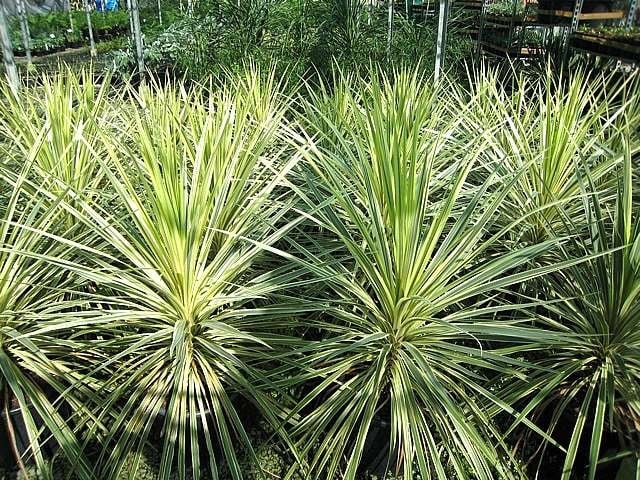

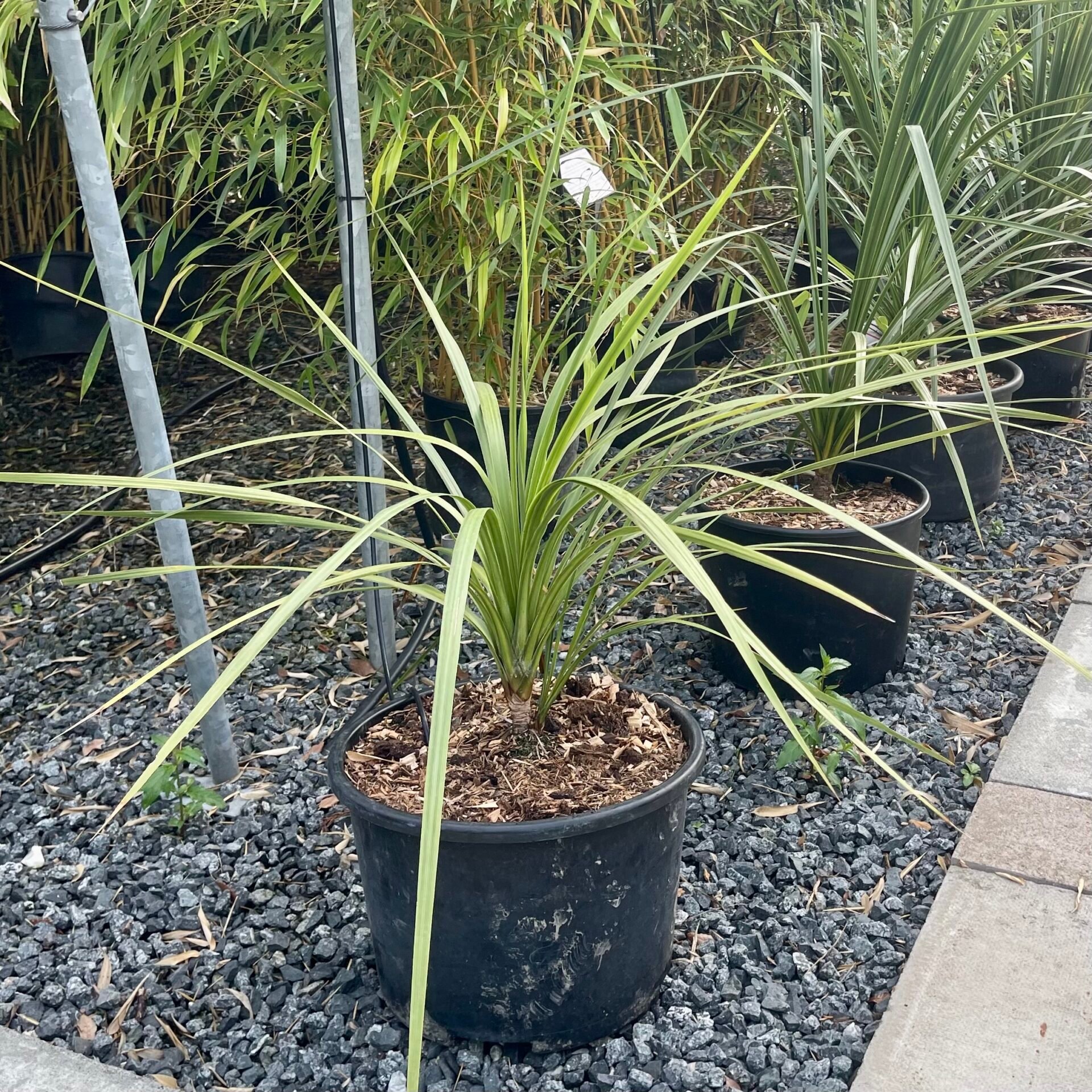
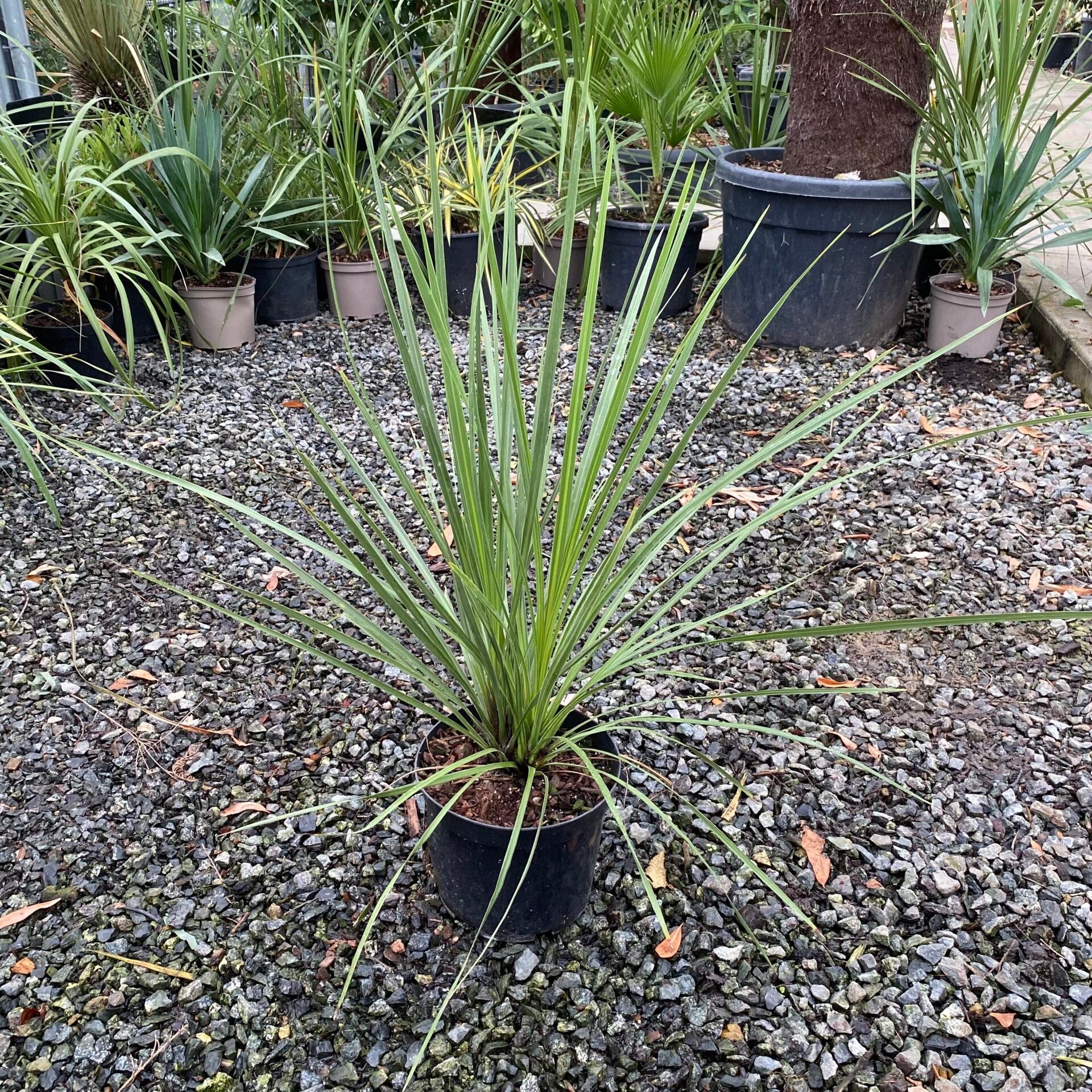
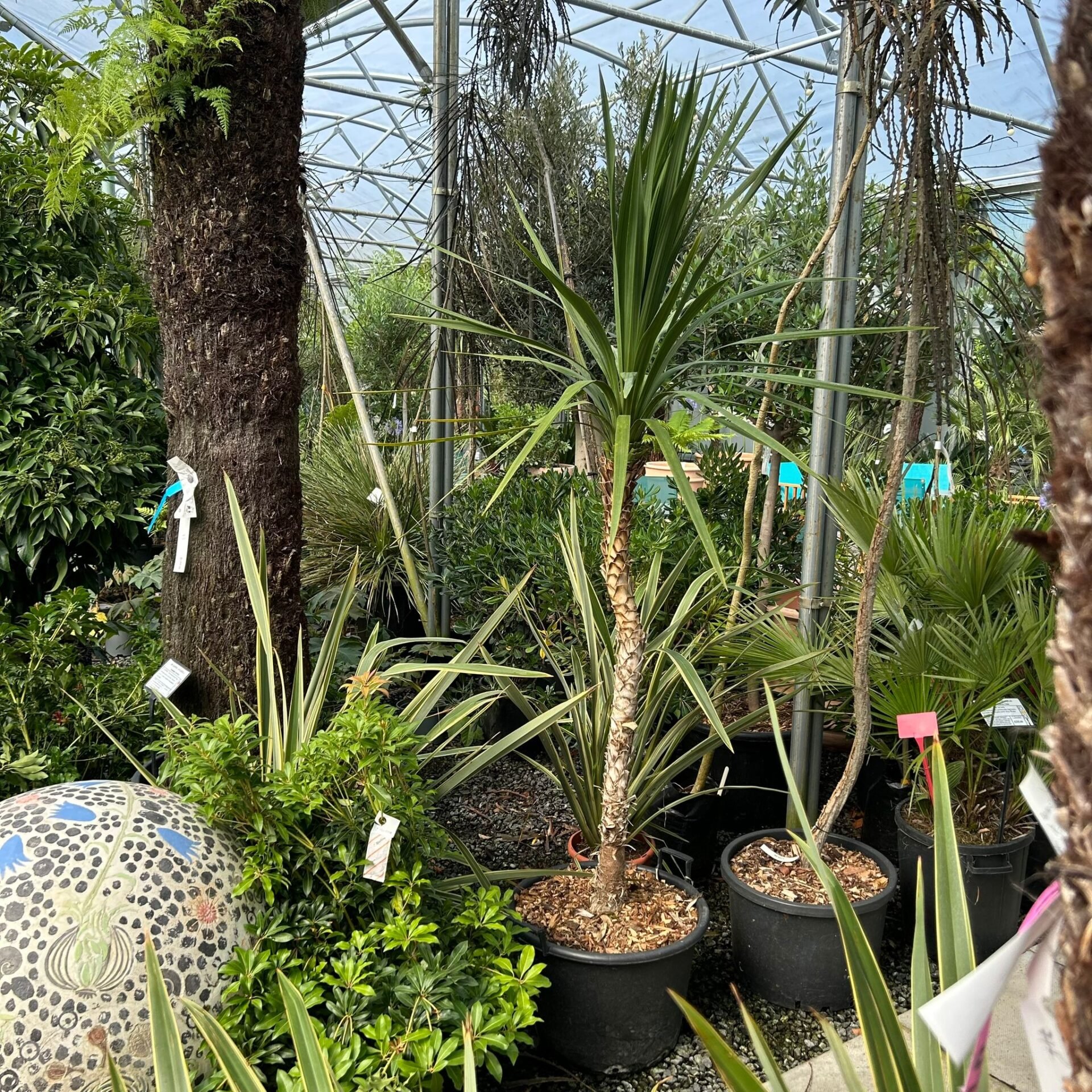
Cordyline australis (Cabbage Tree)
From £42.50 incl. VAT
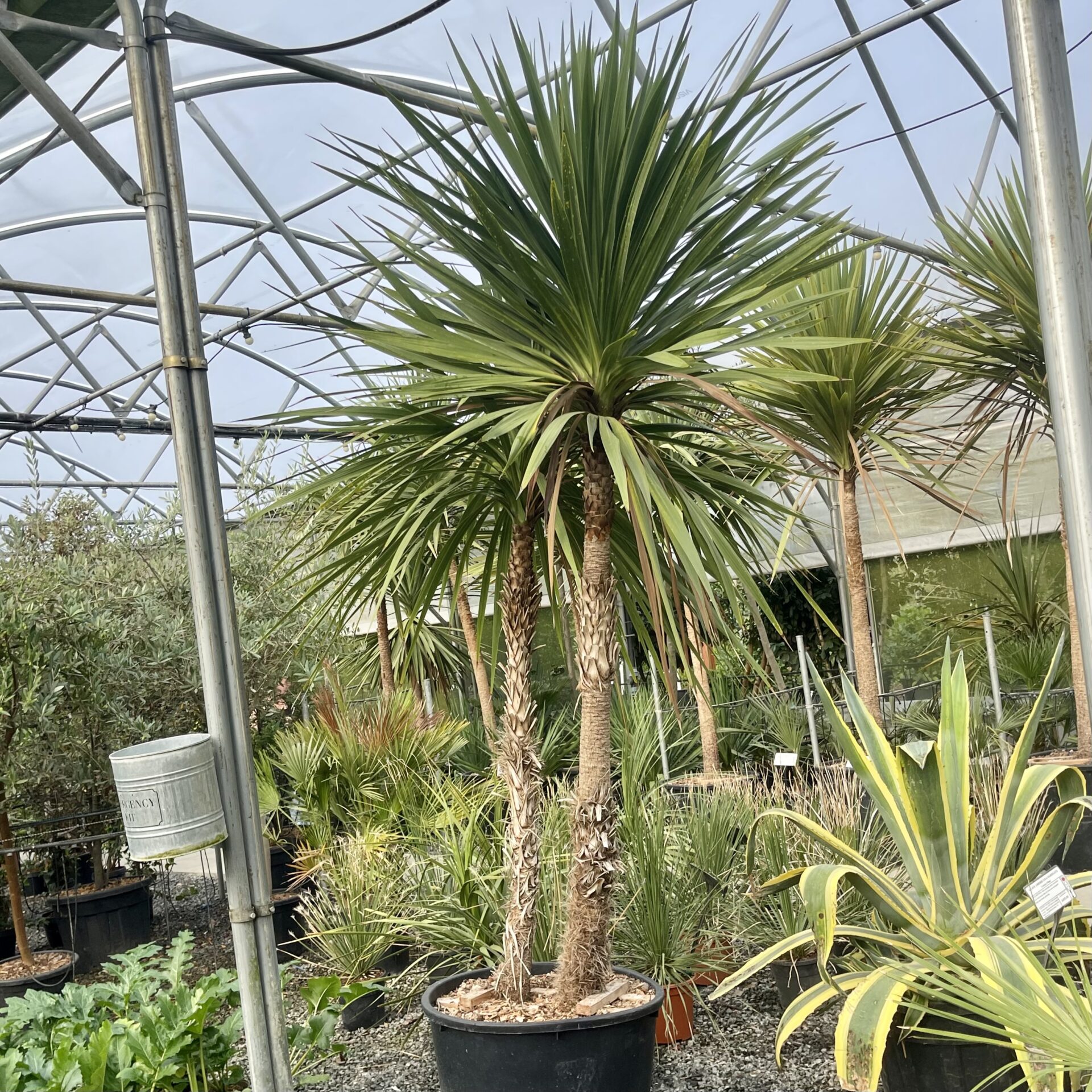
Cabbage Tree, Torquay Palm. Not a cabbage or a palm and doesn’t come from Torquay. Exotic and almost impossible to kill They like lots of light and space. 20ft after 20 years.

Hardiness level Amber
Why Cabbage Palm? Because long before this was brought to our shores, it was central to the Maori peoples of New Zealand. Endemic to that country, it was used for many things. The leaf hearts were eaten as salads. The stems and underground fleshy rhizomes, which are high in natural sugars, were steamed, dried and stored for food. The fibrous leaves were also widely used for ropes and fabric.
And Torquay Palm? Because it is salt and wind resistant, (although we know it as a semi hardy plant it is grown over a lot of the UK,) it is ubiquitous at the seaside, and is fantastic for creating the impression of hotter and sunnier climes.
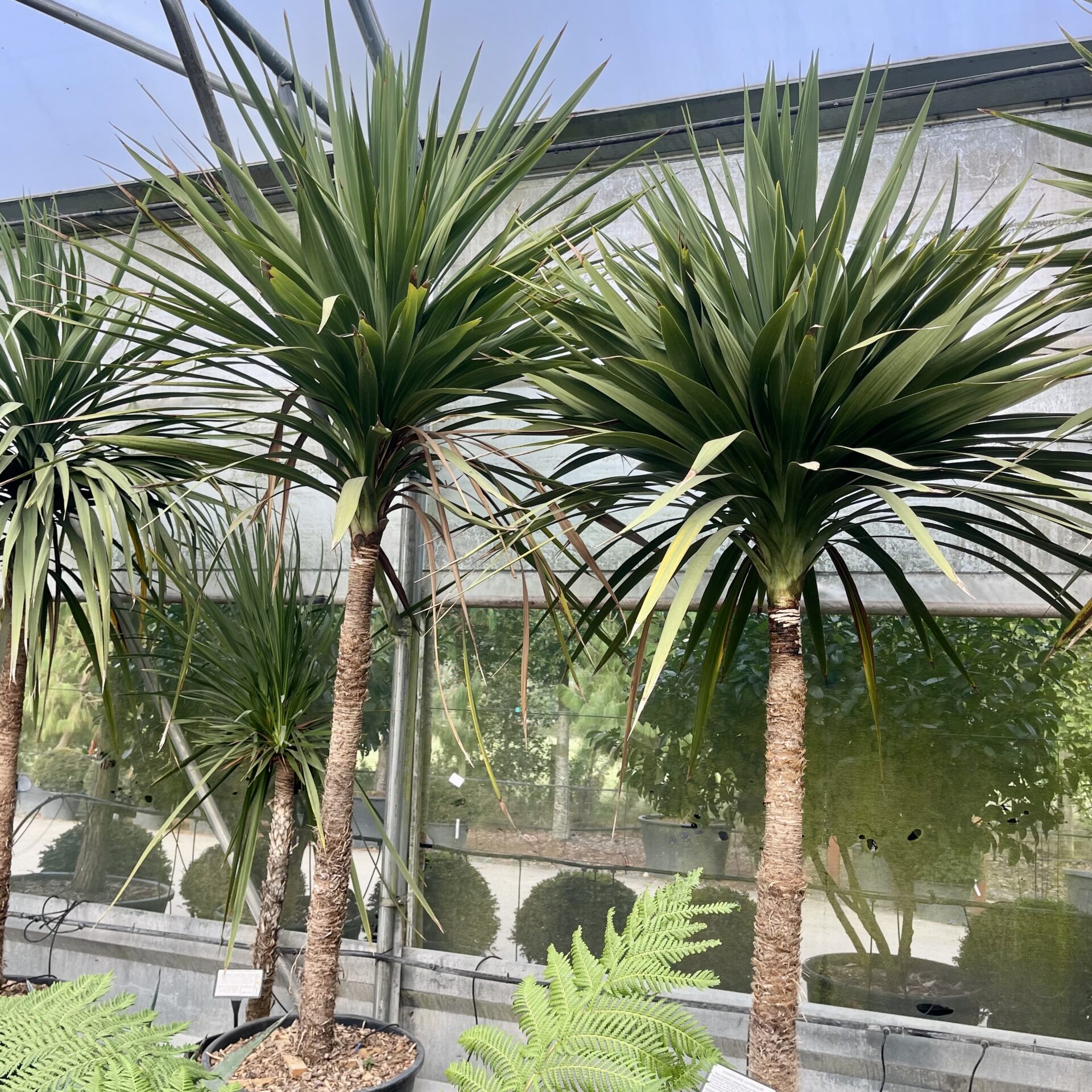
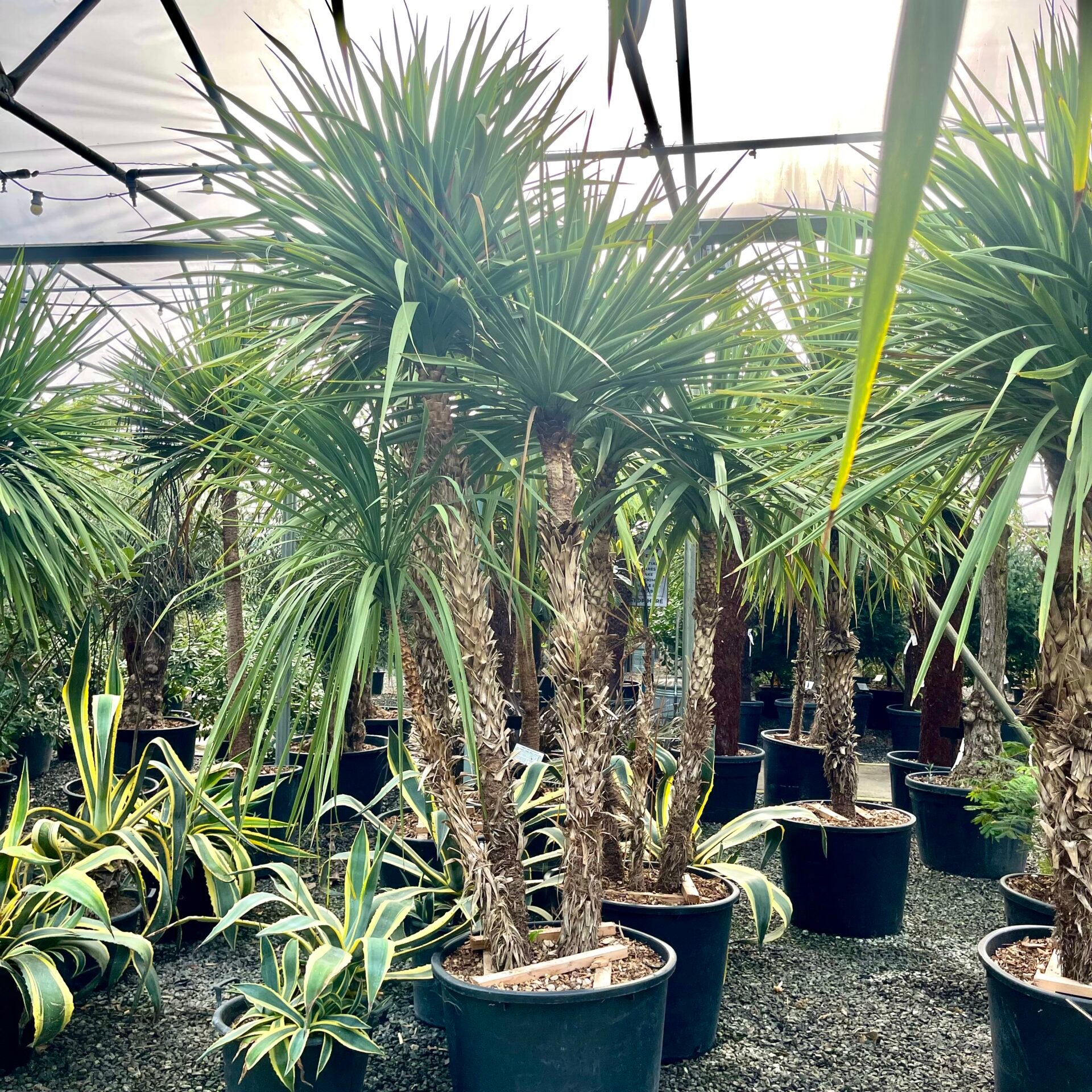
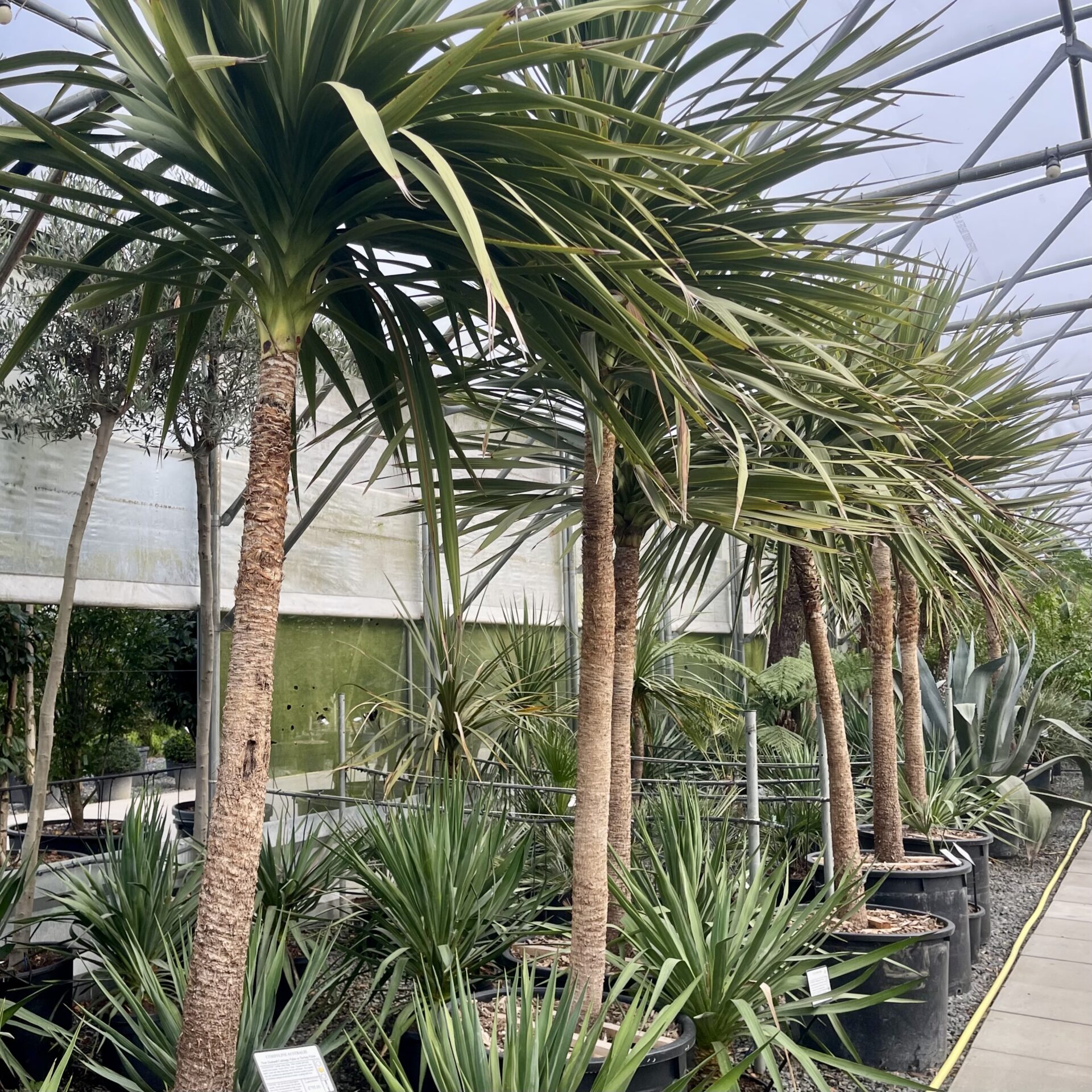
Often single trunked, it can also grow as a multi trunked cluster. It is a monocot, so has a single growing point creating a fountain of green strappy leaves. Eventually, on mature plants a single stem may emerge from the centre of the foliage carrying masses of white starry flowers with an intense sweet scent. After flowering, the plant will go on to produce four or five shoots around the base of the old flowered stem. As these grow, so the characteristic broad-headed branched structure of the Cordyline begins to develop.
They need lots of light so best planted in a sunny spot. They are tolerant of all soil types as long as it has reasonable drainage, they really don’t like growing in a bog. Water when first planted but once established they will look after themselves.
They are not totally frost hardy, but can manage a couple of degrees below freezing. In prolonged cold spells, just pulling the leaves upright and tying them into a bundle will provide good insulation for the growing point, additional protection would come from then wrapping the bundle in horticultural fleece.
For information and ideas on winter protection go to our advice page here.
Often seen at the seaside, they can cope with wind, but the leaves can get tatty, so in that case either tie them up before the winter gales hit or wait till spring and then trim off the damaged leaves close to the trunk. (It is interesting to note that some individual plants drop their tatty leaves quite readily while others retain them. It is best always to cut, not to pull off leaves so as not to cause damage to the trunk.)
A note on Creative Maintenance: We've noticed that on some plants you can pull the old leaves off really easily but if you have to pull too hard, don't do it. Use secateurs or you could damage the plant. Why or what the reason for these different types are, is unknown. They hybridise in New Zealand with the exotic, hardier, wide leafed but temperamental Mountain Cabbage Tree (Cordyline indivisa) and as much of the seed used to grow these comes from New Zealand, you can sometimes spot the difference. The Cordyline australis with slightly wider leaves will have some C. indivisa in their ancestry and will be more frost resistant than the true Cordyline australis which has quite narrow leaves. The difference in frost hardiness is probably only a couple of degrees and there's not much you can do about it so why am I telling you all this stuff? Because it's interesting!
N.B. When clipping several plants with the same tool, have a bucket containing a 5% bleach solution and swish your blades around for 30 seconds between plants to sterilise them. This will help avoid the chance of cross contamination of disease.
IMPORTANT NOTE:
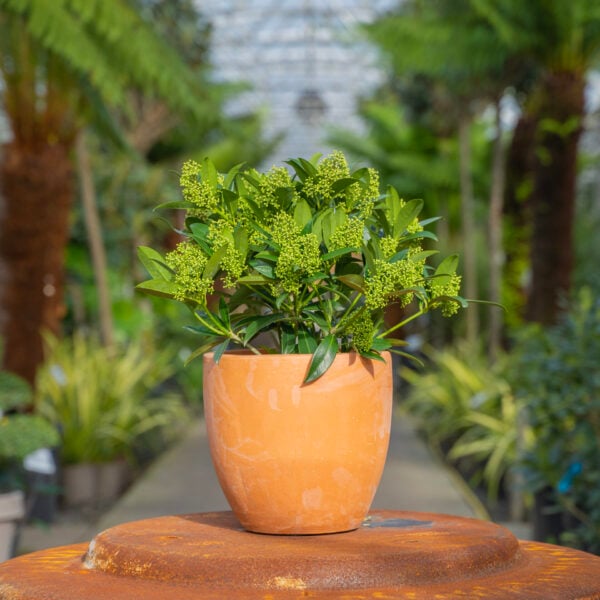
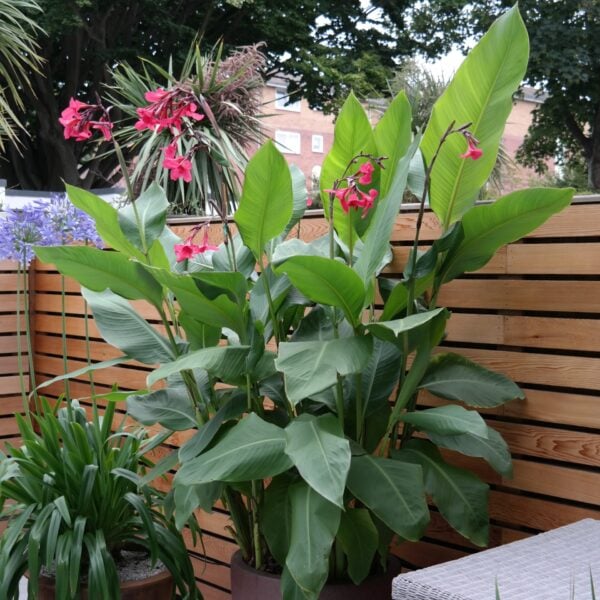
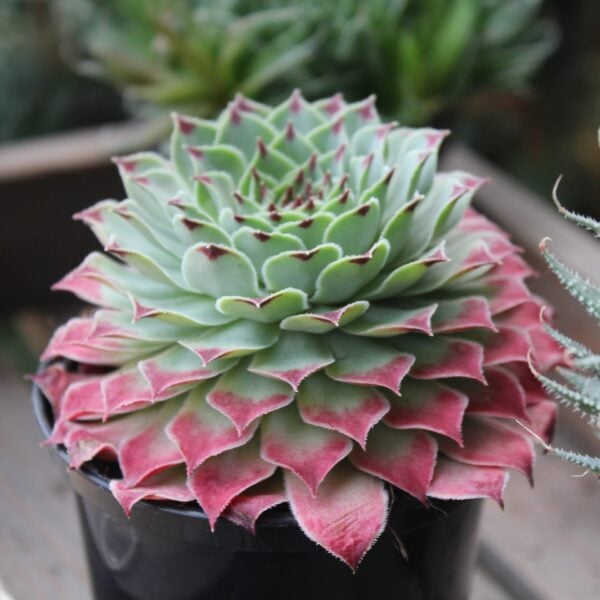
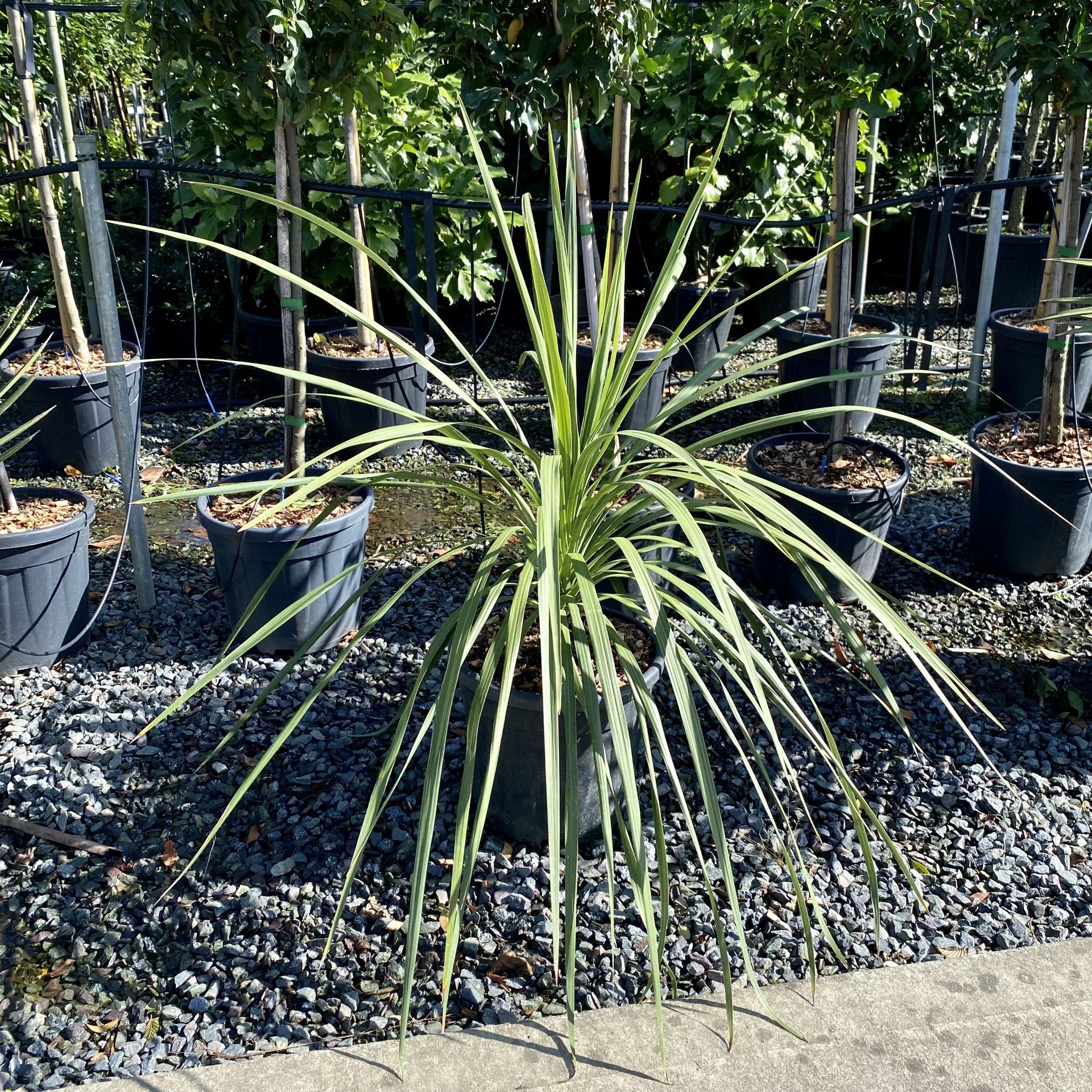
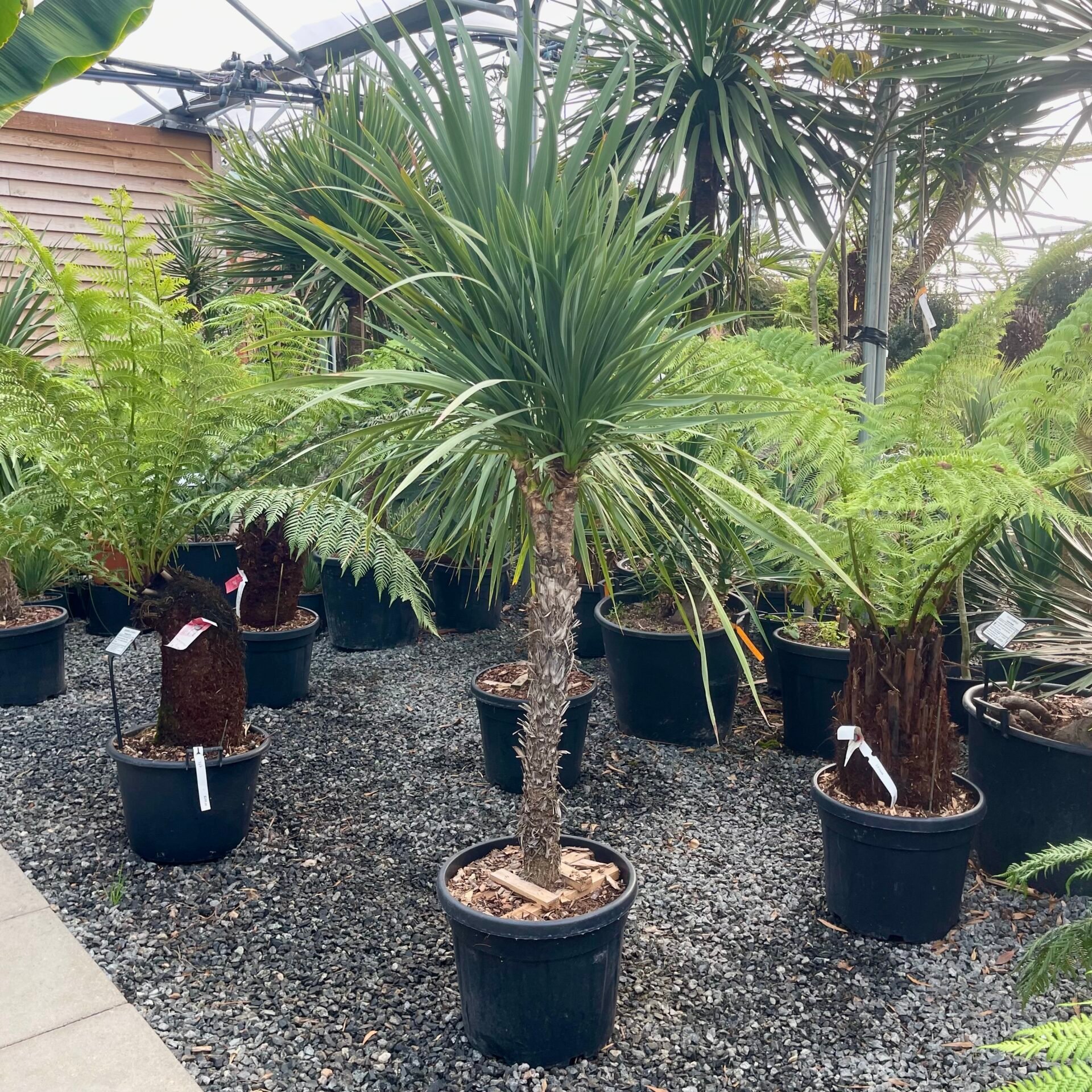
Photos represent the plants at their different stages. Your plant may arrive with new/loose roots, having been recently pruned or cut to enhance it's growth.
Additional Information |
|
|---|---|
| Size | 110L (H2-2.1m, W1.8-1.9m), 200L (H2.7-2.9m, W1.8-2.2m) S1.4-1.7m, 20L (H88-1.2m, W1.4-1.55m) S4-8cm, 25L (H78cm-1.1m, W1-1.1m), 43L (H1.9m, W1.4m) S1.1m, 5L (H70cm, W60-70cm), 5L (H78cm-1.1m, W1.6-1.7m), 90-200L(H2.6-3.4m, W1.35-2.5m)S1-2m,, 90L (H1.27-2m, W1.4-2.1m) S46cm-1m, |
| Plant Type | UK Grown, Big Leaves / Exotics, Evergreen, Flowers, Grown by Us, Palms, Screening Plants |
| Soil Type | |
| Light | |
| Continent of Origin | |
| Specialist Plants | |
| Situation | Coastal, Conservatories, Mild City Gardens, Plants for Pots, Seaside, Sheltered Garden |
| Flower Colour | |
| Hardiness | |
FAQs
HOW FAST DOES CORDYLINE AUSTRALIS GROW?
Roughly 30cms annually, though once the plant has flowered and the head divided, the rate of vertical growth slows because it is spreading sideways.
HOW DO YOU TAKE CARE OF CORDYLINE AUSTRALIS?
Water new plants until established. Remove dead leaves and flower spikes.
HOW TALL DOES CORDYLINE AUSTRALIS GROW?
3-4 metres.
DO CORDYLINE AUSTRALIS PREFER SUN OR SHADE?
Sun.
IS A CORDYLINE AUSTRALIS AND INDOOR OR OUTDOOR PLANT?
Outdoor.
IS CORDYLINE AUSTRALIS SUITABLE FOR HEDGING?
No.
CAN CORDYLINE AUSTRALIS BE GROWN IN POTS OR CONTAINERS?
Yes, with good husbandry.
IS CORDYLINE AUSTRALIS TOXIC TO PETS?
No, but always better to discourage pets from eating plants.